Medical Trends in 2025: Shaping the Future of Healthcare
Related Articles: Medical Trends in 2025: Shaping the Future of Healthcare
Introduction
In this auspicious occasion, we are delighted to delve into the intriguing topic related to Medical Trends in 2025: Shaping the Future of Healthcare. Let’s weave interesting information and offer fresh perspectives to the readers.
Table of Content
- 1 Related Articles: Medical Trends in 2025: Shaping the Future of Healthcare
- 2 Introduction
- 3 Medical Trends in 2025: Shaping the Future of Healthcare
- 3.1 1. Artificial Intelligence (AI) and Machine Learning (ML)
- 3.2 2. Telehealth and Virtual Care
- 3.3 3. Genomics and Personalized Medicine
- 3.4 4. Wearable Technology and Biometric Monitoring
- 3.5 5. Internet of Medical Things (IoMT)
- 3.6 6. Blockchain and Data Security
- 3.7 7. Regenerative Medicine and Stem Cell Therapy
- 3.8 8. Mental Health and Wellness
- 3.9 Related Searches
- 3.9.1 1. Future of Healthcare
- 3.9.2 2. Healthcare Technology Trends
- 3.9.3 3. Healthcare Industry Trends
- 3.9.4 4. Healthcare Innovations
- 3.9.5 5. Medical Device Trends
- 3.9.6 6. Healthcare Marketing Trends
- 3.9.7 7. Healthcare Data Analytics
- 3.9.8 8. Healthcare Policy Trends
- 3.10 FAQs
- 3.11 Tips
- 3.12 Conclusion
- 4 Closure
Medical Trends in 2025: Shaping the Future of Healthcare

The healthcare landscape is constantly evolving, driven by technological advancements, changing demographics, and a growing emphasis on preventative care and personalized medicine. Looking ahead to 2025, several key trends are poised to transform how we approach health and well-being. Understanding these trends is crucial for both healthcare professionals and individuals seeking to optimize their health journey.
1. Artificial Intelligence (AI) and Machine Learning (ML)
AI and ML are revolutionizing healthcare by analyzing vast amounts of data to identify patterns, predict disease risk, and personalize treatment plans.
- Diagnostic Accuracy: AI-powered algorithms can analyze medical images, lab results, and patient data with greater accuracy and speed than human doctors, leading to faster and more precise diagnoses.
- Drug Discovery and Development: AI can accelerate drug discovery by identifying potential drug targets and simulating drug interactions. This can lead to the development of more effective and personalized medications.
- Personalized Medicine: AI-powered platforms can analyze individual patient data to tailor treatment plans and predict potential side effects, leading to more effective and safer outcomes.
- Remote Patient Monitoring: AI-enabled devices can monitor patients remotely, allowing for early detection of health issues and proactive intervention.
Examples:
- IBM Watson: This AI platform analyzes patient data to provide personalized cancer treatment plans.
- Google DeepMind: This AI system has been trained to identify signs of eye diseases and diagnose breast cancer.
2. Telehealth and Virtual Care
Telehealth, the delivery of healthcare services remotely using technology, is becoming increasingly prevalent.
- Increased Access: Telehealth expands access to healthcare services, especially in remote areas and for individuals with limited mobility.
- Convenience: Virtual consultations and remote monitoring offer greater convenience and flexibility for patients.
- Reduced Costs: Telehealth can potentially reduce healthcare costs by minimizing the need for in-person visits.
Examples:
- Video consultations: Patients can connect with doctors and other healthcare professionals via video conferencing.
- Remote patient monitoring: Wearable devices and smartphone apps can track vital signs and provide real-time data to healthcare providers.
3. Genomics and Personalized Medicine
Genomics, the study of an individual’s complete genetic makeup, is enabling the development of personalized medicine.
- Tailored Treatments: By understanding a patient’s genetic profile, doctors can prescribe medications and therapies that are most likely to be effective and safe.
- Early Disease Detection: Genetic testing can identify individuals at risk for certain diseases, allowing for early intervention and prevention.
- Precision Oncology: Genomics is transforming cancer treatment by allowing doctors to target specific mutations in cancer cells.
Examples:
- Direct-to-consumer genetic testing: Companies like 23andMe and AncestryDNA offer genetic testing kits that provide information about ancestry, health risks, and drug responses.
- Liquid biopsies: These tests analyze circulating tumor DNA in blood to detect and monitor cancer.
4. Wearable Technology and Biometric Monitoring
Wearable devices, such as fitness trackers and smartwatches, are increasingly integrated into healthcare.
- Continuous Health Monitoring: Wearables can track heart rate, sleep patterns, activity levels, and other vital signs, providing valuable insights into overall health.
- Early Disease Detection: Wearable devices can detect potential health issues, such as irregular heart rhythms or changes in sleep patterns, allowing for early intervention.
- Personalized Health Coaching: Wearables can provide personalized health recommendations and motivation to support healthy behaviors.
Examples:
- Apple Watch: This smartwatch can monitor heart rate, ECG, and blood oxygen levels.
- Fitbit: These fitness trackers track steps, activity levels, sleep, and heart rate.
5. Internet of Medical Things (IoMT)
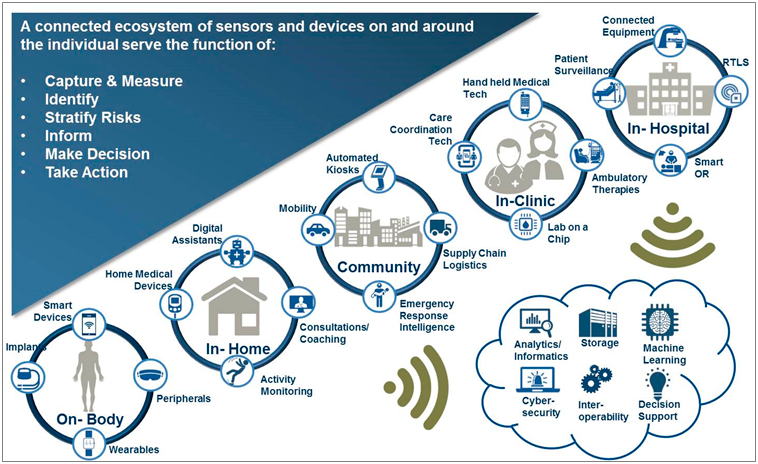
The Internet of Medical Things (IoMT) connects medical devices, sensors, and software to create a network that collects and shares health data.
- Remote Patient Monitoring: IoMT devices can monitor patients remotely, providing real-time data to healthcare providers.
- Improved Efficiency: IoMT can automate tasks and streamline workflows, improving efficiency in hospitals and clinics.
- Enhanced Patient Care: By connecting patients, providers, and medical devices, IoMT can enhance patient care and improve outcomes.
Examples:
- Smart insulin pumps: These devices automatically adjust insulin delivery based on blood sugar levels.
- Remote monitoring systems: These systems can track vital signs, medication adherence, and other important health indicators.
6. Blockchain and Data Security
Blockchain technology is revolutionizing healthcare by enhancing data security and privacy.
- Secure Data Storage: Blockchain can create a secure and tamper-proof record of patient data, protecting it from unauthorized access.
- Improved Interoperability: Blockchain can facilitate the secure exchange of health information between different healthcare providers.
- Transparency and Trust: Blockchain can increase transparency and accountability in the healthcare system.
Examples:
- Medical record management: Blockchain can be used to create secure and tamper-proof medical records.
- Drug traceability: Blockchain can track the movement of drugs from manufacturing to distribution, preventing counterfeiting.
7. Regenerative Medicine and Stem Cell Therapy
Regenerative medicine uses cells and tissues to repair or replace damaged organs and tissues.
- Treatment of Chronic Diseases: Regenerative medicine holds promise for treating chronic diseases, such as diabetes, heart disease, and Parkinson’s disease.
- Tissue Regeneration: Stem cell therapy can be used to regenerate damaged tissues, such as cartilage, bone, and skin.
- Personalized Therapies: Regenerative medicine can be tailored to individual patients, leading to more effective and personalized treatments.
Examples:
- Stem cell therapy for spinal cord injuries: Stem cells can be used to repair damaged nerve cells in the spinal cord.
- Tissue engineering for organ transplantation: Scientists are developing artificial organs using biocompatible materials and stem cells.
8. Mental Health and Wellness
Mental health is increasingly recognized as an integral part of overall well-being.
- Increased Awareness: There is growing awareness of the importance of mental health and the need for accessible and affordable care.
- Technological Solutions: Apps and digital platforms are being developed to provide mental health support and resources.
- Integrative Approaches: Mental health services are being integrated into primary care settings, promoting holistic care.
Examples:
- Mental health apps: These apps offer tools for managing anxiety, depression, and other mental health conditions.
- Teletherapy: Virtual therapy sessions allow patients to connect with therapists remotely.
Related Searches
1. Future of Healthcare
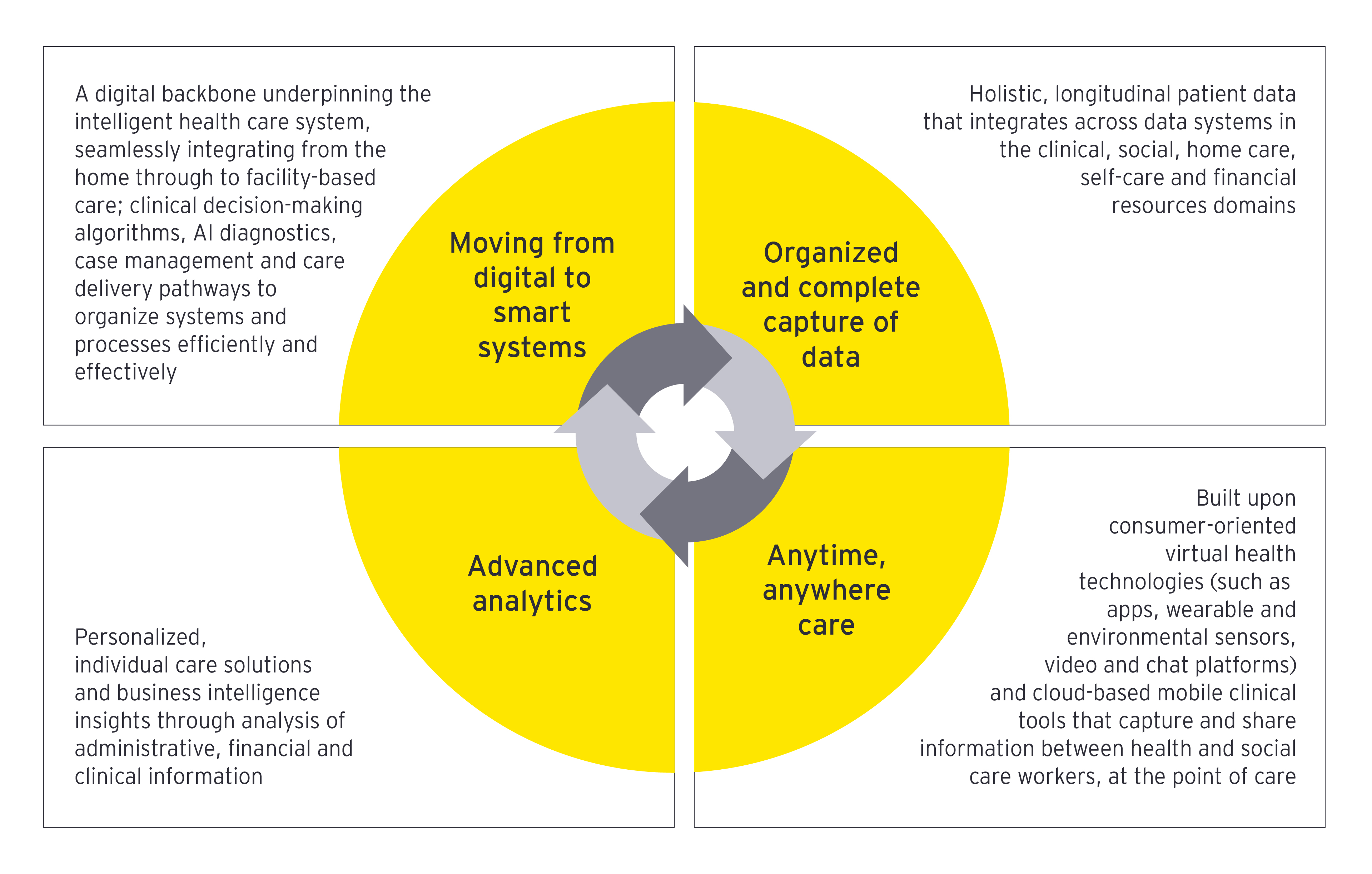
The future of healthcare is characterized by a convergence of technology, data, and personalized medicine. Advancements in AI, genomics, and wearable technology are driving the development of more effective, efficient, and personalized healthcare solutions.
2. Healthcare Technology Trends
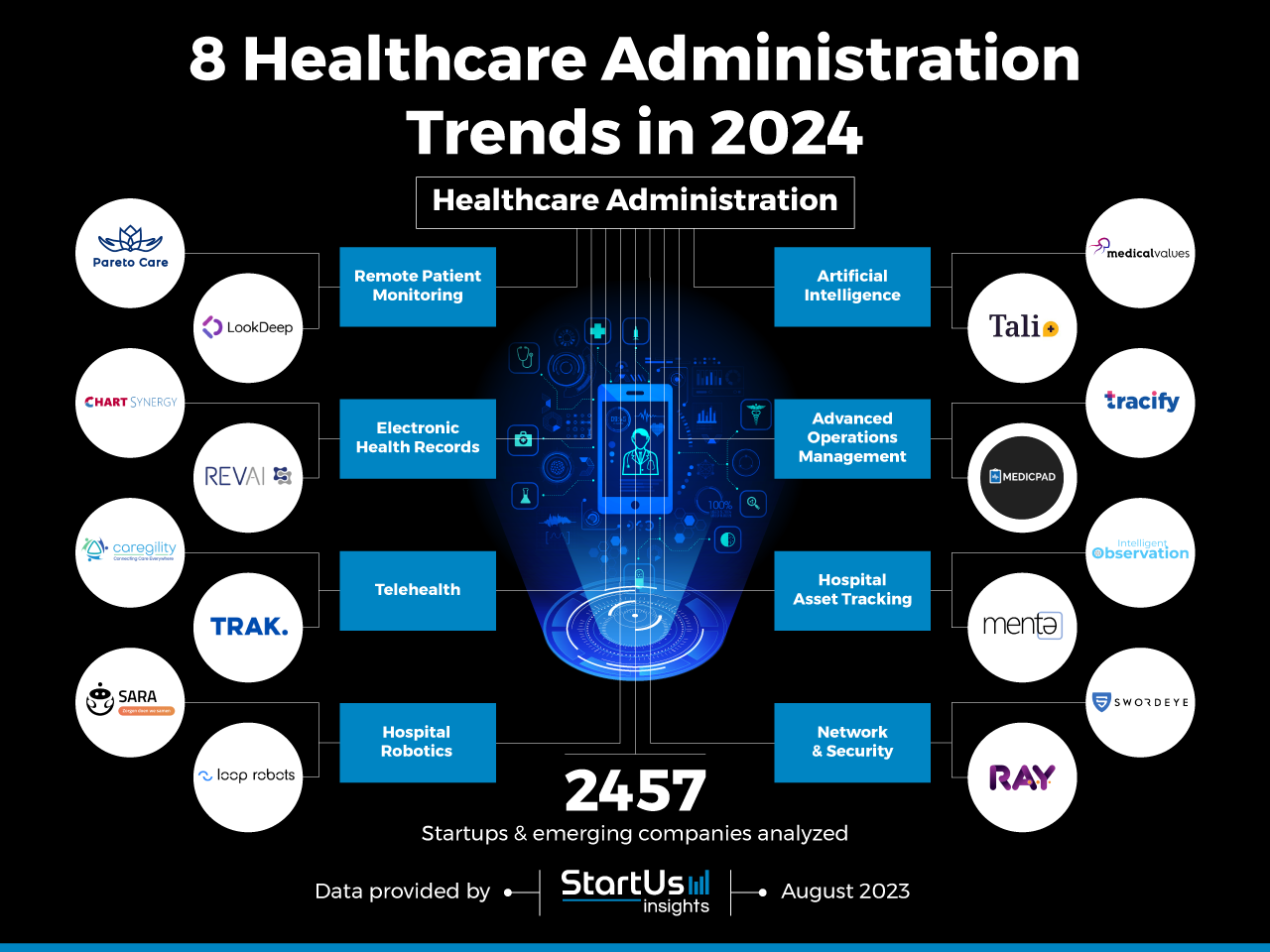
Healthcare technology trends are rapidly transforming the way we approach health and well-being. Key trends include AI, telehealth, wearable technology, and blockchain, which are revolutionizing diagnosis, treatment, and patient care.
3. Healthcare Industry Trends
The healthcare industry is undergoing significant changes, driven by factors such as aging populations, rising healthcare costs, and technological advancements. Key trends include value-based care, population health management, and the rise of consumer-driven healthcare.
4. Healthcare Innovations
Healthcare innovations are constantly emerging, driven by a desire to improve patient outcomes, reduce costs, and enhance the overall healthcare experience. These innovations encompass a wide range of technologies, from AI-powered diagnostic tools to wearable devices that monitor vital signs.
5. Medical Device Trends
Medical device trends are driven by a desire to develop more sophisticated and minimally invasive devices. Advancements in robotics, sensors, and materials are leading to the development of new devices that improve patient outcomes and enhance the quality of care.
6. Healthcare Marketing Trends
Healthcare marketing trends are evolving as healthcare providers seek to reach and engage with patients in a digital world. Key trends include personalized marketing, content marketing, and social media marketing.
7. Healthcare Data Analytics
Healthcare data analytics is playing an increasingly important role in improving patient care and reducing costs. By analyzing large datasets, healthcare providers can identify patterns, predict disease risk, and personalize treatment plans.
8. Healthcare Policy Trends
Healthcare policy trends are shaped by a complex interplay of social, economic, and political factors. Key trends include value-based care, population health management, and the rise of consumer-driven healthcare.
FAQs
Q: What are the biggest challenges facing the healthcare industry in 2025?
A: The healthcare industry faces several challenges in 2025, including:
- Rising healthcare costs: The rising cost of healthcare is a major concern for individuals, employers, and governments.
- Shortage of healthcare professionals: The healthcare workforce is facing a shortage of doctors, nurses, and other healthcare professionals.
- Data security and privacy: As healthcare increasingly relies on technology, data security and privacy become critical concerns.
- Ethical considerations: The use of AI, genomics, and other emerging technologies raises ethical questions that need to be addressed.
Q: How can individuals benefit from the medical trends of 2025?
A: Individuals can benefit from the medical trends of 2025 by:
- Taking advantage of telehealth services: Telehealth provides convenient access to healthcare services, especially for individuals in remote areas or with limited mobility.
- Using wearable technology: Wearable devices can provide valuable insights into overall health and help individuals make informed decisions about their well-being.
- Participating in personalized medicine: By understanding their genetic profile, individuals can benefit from tailored treatments and preventive care strategies.
- Adopting healthy lifestyle habits: The medical trends of 2025 emphasize the importance of preventive care and healthy lifestyle choices.
Q: What are the potential risks associated with the medical trends of 2025?
A: The medical trends of 2025 also present some potential risks, including:
- Job displacement: The automation of tasks in healthcare could lead to job displacement for some healthcare professionals.
- Data privacy breaches: The increasing reliance on technology raises concerns about data security and privacy breaches.
- Algorithmic bias: AI algorithms can be biased, leading to unfair or discriminatory outcomes.
- Ethical concerns: The use of AI, genomics, and other emerging technologies raises ethical questions that need to be addressed.
Tips
- Stay informed about the latest medical trends: Read articles, attend conferences, and follow healthcare professionals on social media to stay up-to-date on the latest advancements.
- Talk to your doctor about the benefits of personalized medicine: Discuss your genetic profile and how it can inform your treatment plan.
- Consider using telehealth services: Telehealth can provide convenient access to healthcare services, especially for individuals with limited mobility.
- Use wearable technology to track your health: Wearable devices can provide valuable insights into your overall health and help you make informed decisions about your well-being.
- Be mindful of data security and privacy: Protect your personal health information by using strong passwords, avoiding public Wi-Fi for sensitive data, and being cautious about sharing information online.
Conclusion
The medical trends of 2025 are shaping the future of healthcare, offering exciting opportunities to improve patient outcomes, enhance the quality of care, and make healthcare more accessible and personalized. However, it’s crucial to address the challenges and risks associated with these trends, ensuring that technology serves humanity and promotes equitable access to healthcare for all. As we navigate this rapidly evolving landscape, embracing these trends while considering their ethical implications will be essential in shaping a healthier and more equitable future for all.


Closure
Thus, we hope this article has provided valuable insights into Medical Trends in 2025: Shaping the Future of Healthcare. We thank you for taking the time to read this article. See you in our next article!